Choosing between 80/20 cellulose and polyester spunbond filter media depends on your dust, operating conditions, and maintenance goals. Both are used in dust collector cartridges, but they offer different strengths.
80/20 cellulose is often an economical option for dry dust. Polyester spunbond may be a better fit when greater durability or moisture resistance is needed. The right choice requires reviewing the complete filter specification and your application.
What Is 80/20 Cellulose Filter Media?
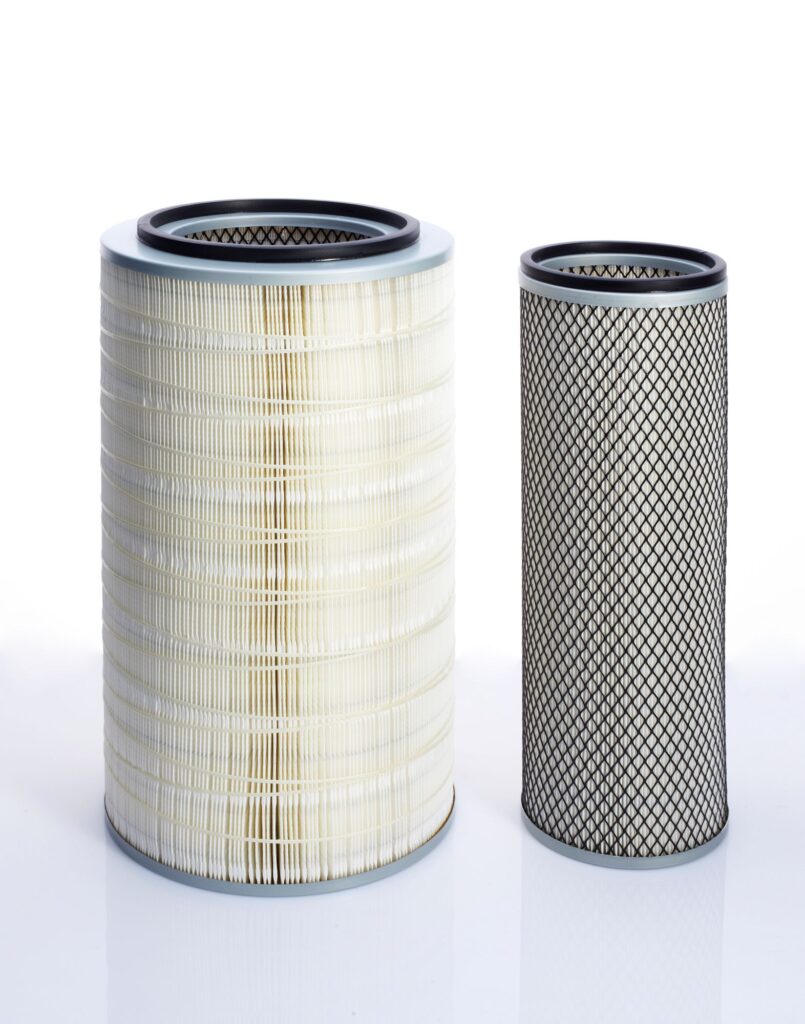
80/20 filter media typically combines approximately 80% cellulose fibers with 20% synthetic fibers, commonly polyester. It is widely used in pleated dust collector cartridges.
For suitable dry-dust applications, this blend offers effective filtration at a relatively low initial cost. However, moisture, abrasive material, and difficult cleaning conditions can limit its performance.
An 80/20 blend may be worth considering when:
- Dust is dry and releases readily during cleaning.
- Operating conditions stay within the filter’s specifications.
- Moisture and oil contamination are minimal.
- Lower upfront replacement cost is a priority.
Some cellulose-blend cartridges also include nanofiber surface layers or other treatments. These options should be evaluated separately from untreated media.
What Is Polyester Spunbond Filter Media?
Polyester spunbond is a synthetic filter media made from bonded polyester filaments. It generally provides greater mechanical strength and moisture resistance than standard cellulose-blend media.
Those characteristics can make it useful in applications where filters face demanding cleaning cycles or abrasive dust. However, polyester does not automatically make a filter suitable for wet, oily, sticky, or chemically aggressive material.
Polyester spunbond may be worth considering when:
- The application requires stronger, more durable media.
- Abrasion or humidity is a concern.
- Existing cellulose-blend filters deteriorate prematurely.
- Professional cleaning or reuse is being evaluated.
Suitability depends on the media finish, cartridge construction, collected dust, and operating conditions.
80/20 Cellulose vs. Polyester Spunbond at a Glance
| Factor | 80/20 Cellulose Blend | Polyester Spunbond |
|---|---|---|
| Initial cost | Generally lower | Generally higher |
| Mechanical durability | Suitable for many routine dry-dust applications | Generally greater strength |
| Moisture resistance | More sensitive to moisture | Generally more moisture-resistant |
| Abrasion resistance | May be limited in demanding applications | Often a stronger option, subject to application review |
| Cleaning and reuse | Requires evaluation of the specific filter | May offer reuse options when construction and contamination allow |
| Filtration efficiency | Depends on media grade, treatments, and testing | Depends on media grade, treatments, and testing |
Neither material is automatically more efficient at capturing fine particles. Compare the filter’s documented performance rather than relying on its media name alone.
Which Media Is Better for Your Dust Collector?
Start with the conditions that affect filter performance:
- Dust characteristics: Is the material fine, coarse, abrasive, fibrous, or sticky?
- Moisture: Does the collector experience humidity, condensation, or liquid carryover?
- Temperature: Are normal conditions and temperature spikes within the complete filter’s limits?
- Cleaning: Does the dust release effectively during the collector’s cleaning cycle?
- Current problems: Are filters plugging, tearing, leaking, or requiring frequent replacement?
If your current 80/20 filters perform reliably with dry dust, switching materials may provide little benefit. If they repeatedly suffer damage or moisture-related deterioration, polyester spunbond may deserve closer evaluation.
A media change alone will not correct a failed pulse-cleaning system, condensation problem, or poor filter seal. Identify the cause of recurring issues before selecting a replacement. Our guide to premature filter failure explains common contributors.
Can These Filters Be Cleaned and Reused?
Some cartridges may qualify for professional cleaning or reconditioning. The decision depends on the complete filter assembly, media condition, dust type, and contamination.
Do not assume polyester spunbond cartridges are washable. End caps, adhesives, gaskets, and surface treatments must also be compatible with the proposed cleaning method.
Likewise, a filter that looks intact may be unsuitable for reuse because of contamination or reduced performance. Have the filter evaluated before choosing cleaning over replacement.
Compare Total Cost, Not Just Purchase Price
A lower-priced cartridge can be the best value when it performs reliably in your application. A more expensive cartridge may justify its cost if it provides longer usable life or reduces changeout frequency.
Compare filter price, freight, installation labor, downtime, and cleaning options. Base expected savings on your operating history or relevant supporting data. Avoid assuming that one material always lasts longer
Need Help Choosing Filter Media?
Dust Filter Shop can help compare 80/20 cellulose, polyester spunbond, and other cartridge media options for your collector.
Send us your current part number, collector model, dust type, and any performance concerns. We can help identify replacement options suited to your operating conditions.
Explore our dust collector cartridge filters or request a quote.