Commercial HVAC systems work hard to keep buildings comfortable, safe, and properly ventilated. Knowing when to change commercial HVAC filters: signs, schedule, and best practices is essential for maintaining system efficiency and indoor air quality. Whether your facility is an office, warehouse, school, manufacturing plant, retail space, or medical building, your HVAC filters play a critical role in protecting equipment and ensuring clean air.
When filters are not changed on time, airflow drops, energy costs increase, and the HVAC system has to work harder than necessary. In commercial buildings, that can lead to higher operating costs, uncomfortable work areas, equipment strain, and more frequent maintenance issues.
How Often Should Commercial HVAC Filters Be Changed?
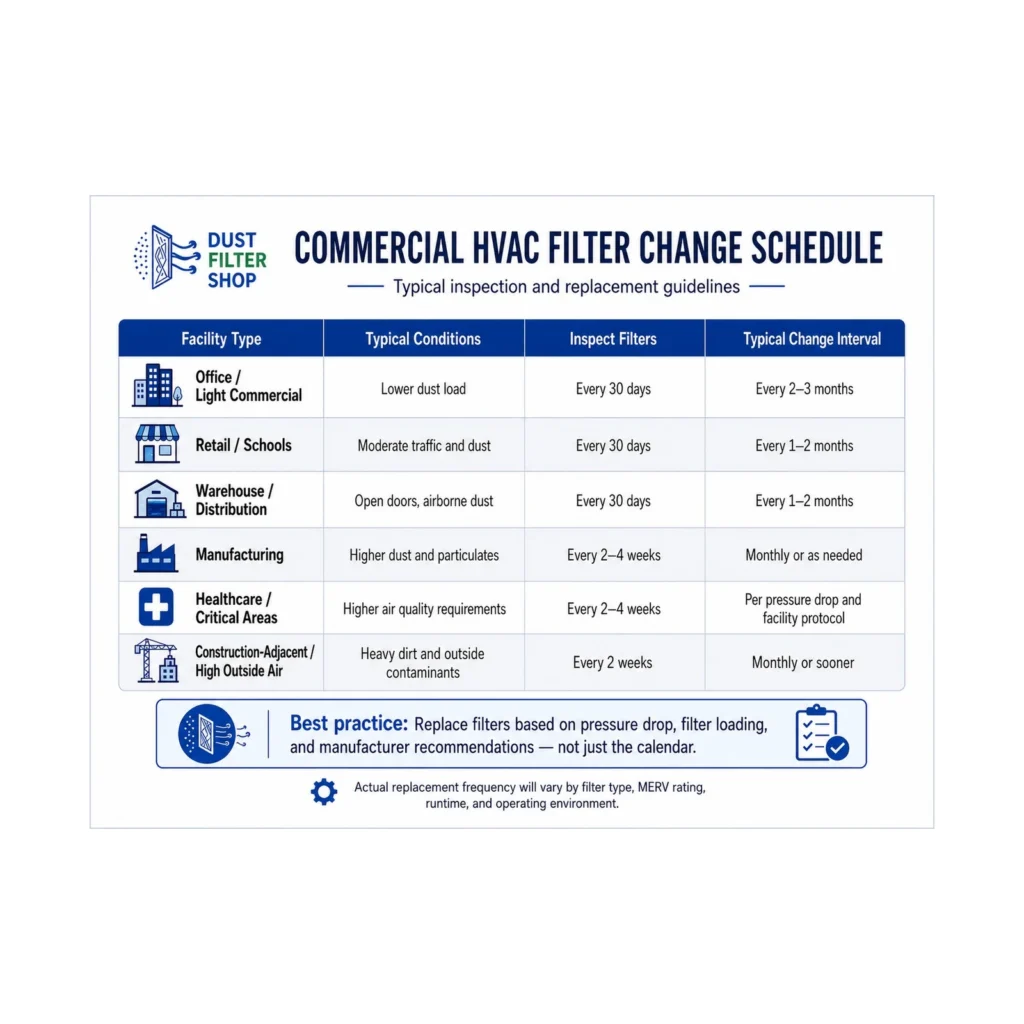
There is no single replacement schedule that works for every commercial building. A good starting point is to inspect filters every 30 days and replace them based on condition, pressure drop, and the environment they are operating in.
Many commercial HVAC filters are changed every 1 to 3 months, but some facilities may need more frequent replacement depending on dust levels, building traffic, production activity, outdoor air intake, and system runtime.
Facilities that may need more frequent filter changes include:
- Manufacturing plants
- Warehouses
- Schools and universities
- Healthcare facilities
- Woodworking or fabrication shops
- Distribution centers
- Buildings near construction areas
- Facilities with high foot traffic
- Spaces with high outside air intake
The best replacement schedule is based on actual filter loading, not just the calendar.
Signs Your Commercial HVAC Filter Needs to Be Changed
Understanding when to change commercial HVAC filters: signs, schedule, and best practices starts with recognizing these key warning signs:
1. The Filter Is Visibly Loaded With Dust
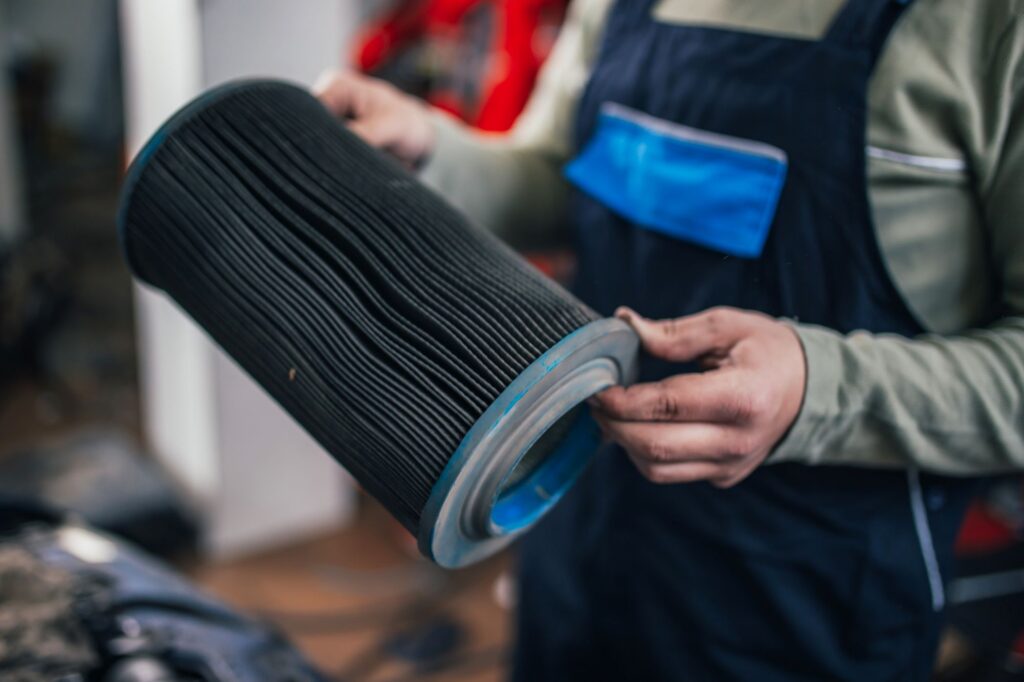
A filter that is covered in dust, debris, or buildup is no longer allowing air to pass through efficiently. Once the filter becomes loaded, airflow is restricted and the HVAC system has to work harder.
2. Pressure Drop Is Higher Than Normal
Pressure drop is one of the most reliable indicators that a filter needs replacement. As filters collect particles, resistance increases. If the pressure drop exceeds recommended levels, it’s time to change the filter.
3. Reduced Airflow in the Building
Weak airflow, uneven temperatures, or inconsistent heating and cooling can indicate clogged filters. Dirty filters limit airflow and reduce system performance.
4. Energy Costs Are Increasing
Clogged filters force HVAC systems to work harder, increasing energy consumption and operating costs.
5. The System Is Running Longer Than Usual
Longer run cycles often signal restricted airflow caused by dirty filters.
6. More Dust Around Vents or Work Areas
Dust buildup around vents or workspaces may indicate filters are no longer effective or improperly installed.
7. Filters Are Damaged or Collapsed
Filters that are bent, torn, wet, or collapsed should be replaced immediately to prevent unfiltered air from entering the system.
Why Timely Filter Changes Matter
Following when to change commercial HVAC filters: signs, schedule, and best practices helps:
- Maintain proper airflow
- Protect HVAC equipment
- Reduce energy consumption
- Improve indoor air quality
- Lower maintenance costs
- Reduce strain on fans, coils, and motors
- Keep building occupants comfortable
- Prevent dust buildup inside the system
A dirty filter may seem minor, but it can significantly impact performance and costs.
Calendar-Based vs. Condition-Based Replacement
Many facilities rely on a fixed schedule, such as monthly or quarterly replacements. While simple, this approach may not always be efficient.
A condition-based replacement program evaluates:
- Visual inspection
- Pressure drop readings
- Building usage
- Dust levels
- Runtime hours
- Seasonal conditions
- Manufacturer recommendations
This method ensures filters are replaced at the right time—not too early or too late.
Commercial HVAC Filter Change Checklist
Use this checklist during routine maintenance:
- Inspect filters at least every 30 days.
- Check pressure drop if gauges are installed.
- Replace filters that are loaded, damaged, wet, or collapsed.
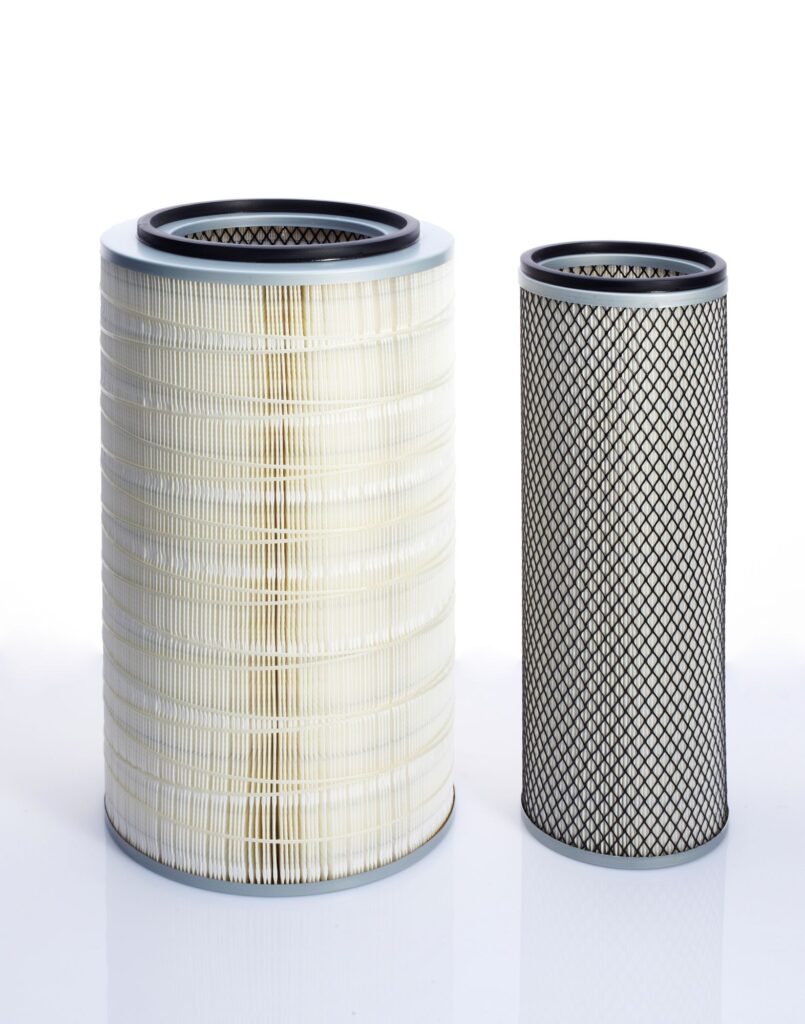
- Confirm the correct size and MERV rating.
- Ensure filters are installed in the correct airflow direction.
- Check for gaps or air bypass around the frame.
- Keep replacement filters in stock.
- Track changeout dates and filter condition over time.
Need Commercial HVAC Filters?
Keeping the right filters on hand helps reduce downtime, protect your HVAC equipment, and keep your facility running efficiently.
If you need replacement commercial HVAC filters, Dust Filter Shop can help match the correct size, MERV rating, and filter type for your system.
Contact us for a quote: Request a Quote