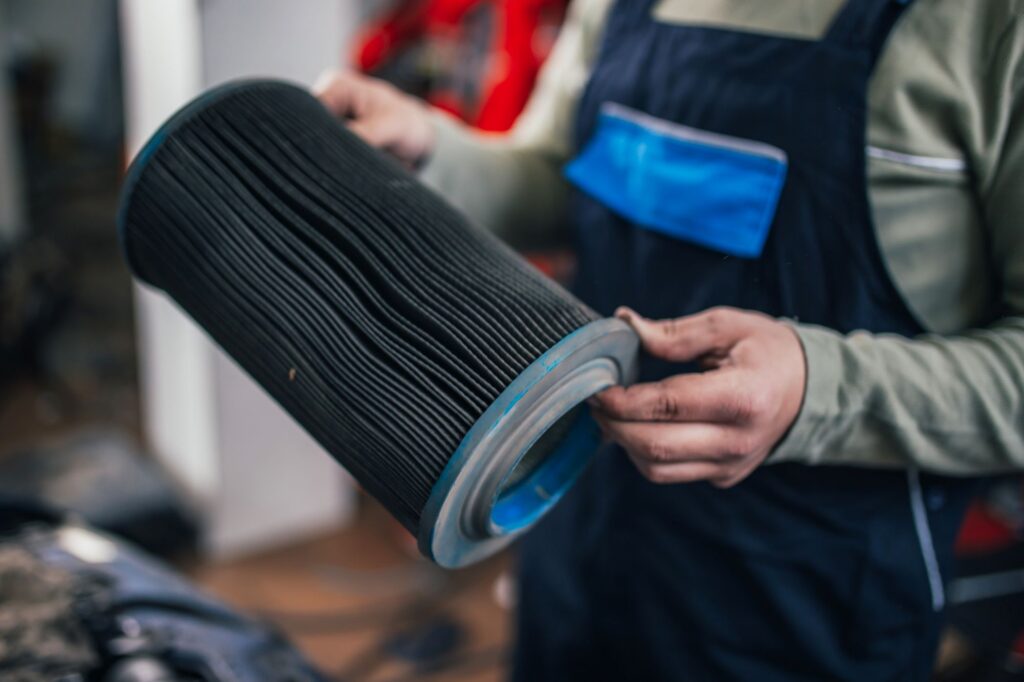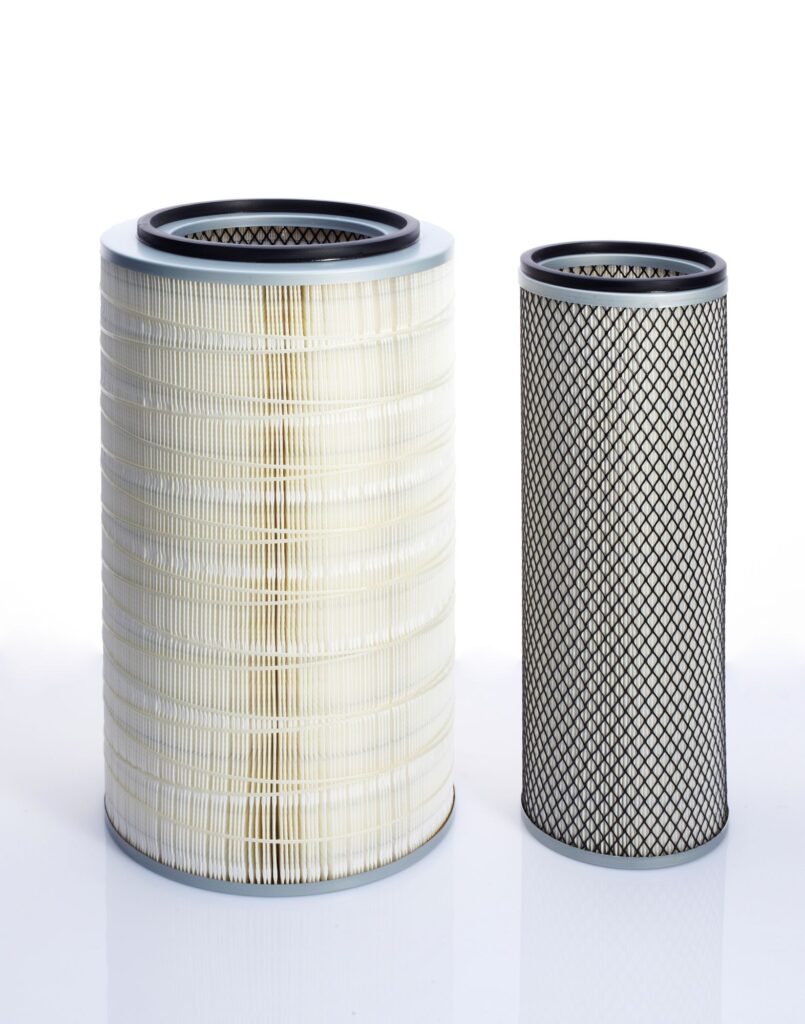
When dust collector filters start showing signs of heavy dust loading, high differential pressure, or reduced airflow, many facilities assume the next step is to buy new filters.
In some cases, replacement is the right choice. But if the filters are still in good physical condition, professional filter reconditioning may be a more cost-effective option. Reconditioning can help extend filter life, improve airflow, address minor issues, and reduce overall filter replacement costs.
At Dust Filter Shop, we help facilities compare both options: reconditioning existing dust collector filters or replacing them with new aftermarket filters that meet or exceed OEM performance.
This case study shows how filter reconditioning can reduce maintenance costs when the filters are still good candidates for reuse.
The Situation
A manufacturing facility was experiencing rising differential pressure across one of its dust collectors. Airflow was starting to drop, and the maintenance team was preparing to replace a full set of cartridge filters.
The dust collector used 24 cartridge filters. New replacement dust collector filters were quoted at $185 per filter, bringing the filter-only replacement cost to:
24 filters x $185 each = $4,440
Before placing the order, the facility wanted to know whether professional filter reconditioning could lower the immediate cost.
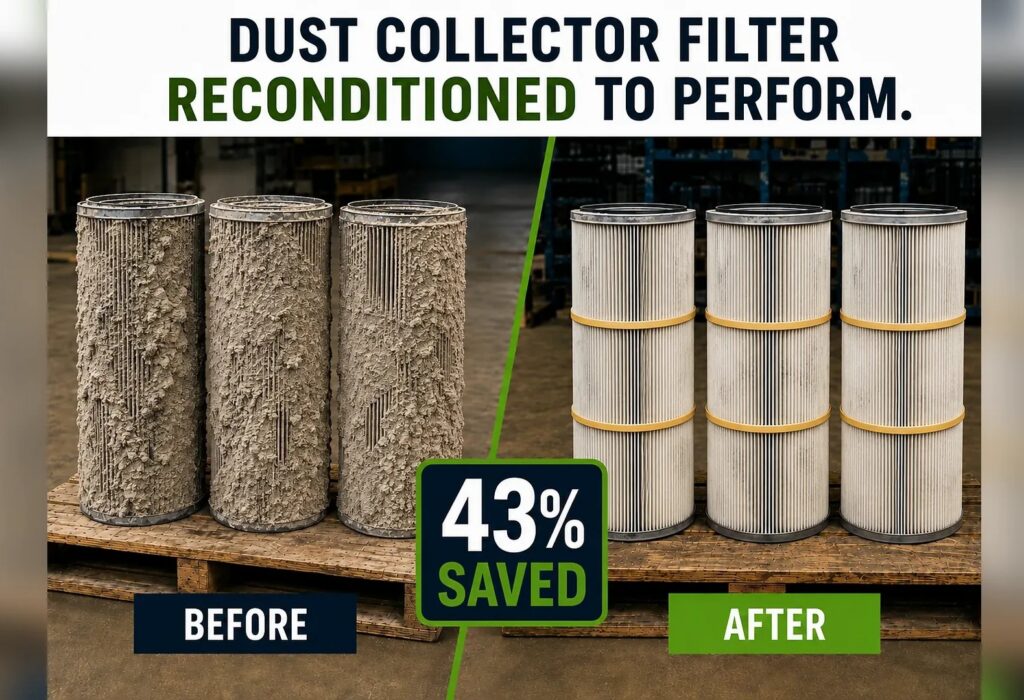
The filters were dirty and heavily loaded with dust, but they were not severely damaged. The end caps were intact, the filter media was not torn, and the gaskets were still in usable condition. Because the filters were structurally sound, they were good candidates for reconditioning.
Cost Comparison: Filter Reconditioning vs. New Filters
Here is how the two options compared.
For new replacement filters, the customer would pay for the filters plus freight to receive them:
- 24 new cartridge filters
- $185 per filter
- Total filter cost: $4,440
- Estimated freight to customer: $350
- Total estimated replacement cost: $4,790
For professional filter reconditioning, the customer would pay for reconditioning plus freight both ways. The dirty filters would be shipped to the reconditioning facility, then the reconditioned filters would be shipped back:
- 24 cartridge filters reconditioned
- $85 per filter
- Total reconditioning cost: $2,040
- Estimated inbound freight to reconditioning facility: $350
- Estimated return freight back to customer: $350
- Total estimated reconditioning cost: $2,740
By choosing professional filter reconditioning instead of buying new filters, the facility reduced its immediate filter cost from approximately $4,790 to $2,740.
That created an estimated savings of:
$4,790 – $2,740 = $2,050 saved
That is approximately a 43% savings compared with purchasing new replacement dust collector filters.
Why Filter Reconditioning Made Sense
Filter reconditioning was a practical option because the filters were dirty, but still usable. The issue appeared to be dust loading, not complete filter failure.
The inspection showed:
- Filter media was loaded with dust but not torn
- End caps were secure and undamaged
- Gaskets were still in usable condition
- There was no major moisture damage
- There was no visible media collapse
- The filters were still sealing properly
Because the filters were still structurally sound, reconditioning allowed the facility to return them to service and delay the larger expense of buying a full replacement set.
As part of the reconditioning process, filters can also be inspected for minor issues. In some cases, minor repairs may be possible, such as addressing small gasket issues, loose components, or other limited wear items. If a filter is too damaged to be reused safely, replacement is the better option.
For facilities with multiple dust collectors or frequent filter changeouts, these savings can add up quickly. If a plant replaces the same 24 filters twice per year at approximately $4,790 per replacement, the annual replacement cost would be about $9,580. If one of those replacement cycles can be delayed through filter reconditioning, the facility could save approximately $2,050 in that cycle alone.
When Buying New Filters Is the Better Choice
Filter reconditioning is not always the right answer. In some situations, replacement is the safer and more effective option.
New replacement filters are usually recommended when:
- Filter media is torn, collapsed, or damaged
- End caps are loose, broken, or separated
- Gaskets are heavily worn, cracked, or missing
- Filters have been exposed to heavy moisture
- Dust is oily, sticky, or difficult to release
- Filters have already been reconditioned multiple times
- Emissions or dust bypass are a concern
A damaged filter should not be reused just because it can be reconditioned. If the filter can no longer seal properly or capture dust effectively, replacing it is the better long-term decision.
Filter Reconditioning vs. Replacement: Which Is Right for Your Facility?
The right choice depends on the condition of the filters, the dust being collected, and the needs of the facility.
If the filters are simply loaded with dry dust but still in good physical condition, reconditioning may be the most cost-effective option. If the filters are damaged, leaking, contaminated, or no longer sealing properly, replacement is usually the better choice.
In many cases, the best dust collector maintenance plan includes both options. Reconditioning can help extend filter life and reduce unnecessary replacement costs, while new filters are available when the existing filters are no longer safe or effective to reuse.
The Bottom Line
Dust collector filter reconditioning and new replacement filters both have a place in a strong maintenance plan.
In this example, reconditioning 24 cartridge filters saved the facility approximately $2,050, or about 43%, compared with buying new replacement filters.
At Dust Filter Shop, we help facilities compare both options so they are not replacing filters too soon or reconditioning filters that should be replaced. Whether you need professional filter reconditioning or new replacement dust collector filters, our goal is the same: help you improve dust collector performance and reduce filter costs.
Need Help Deciding Whether to Recondition or Replace Your Filters?
Contact Dust Filter Shop and we can help review your filter type, quantity, condition, and application. From there, we can help determine whether reconditioning makes sense or if new replacement filters are the better option.
Request a Filter Reconditioning Quote
Or call us at 816-601-1200 for help with filter reconditioning, replacement filters, or custom filter options.
Costs shown are example estimates. Actual savings vary based on filter size, quantity, condition, freight, application, and whether the filters are good candidates for reconditioning. Minor repairs may be possible in some cases, but filters with significant media, end cap, gasket, or structural damage should typically be replaced.